|
 |


|
|
Duly completed BIQ ( Basic Information Questionnaire) should submit along the project proposal to the CEA
Submission of Proposal/request along with the following relevant documents to the CEA
Approval from Plant/Animal Quarantine
Relevant customs declaration forms
Disposal site
Survey plan of the proposed site
Charge processing fee
Inspection of the site of disposal
Issuance of clearance.
Implementation of obligations of the Basel Convention (BC) (www.basel.int)
Implementation of the National obligations on Import, Export and Transit of waste listed in the Basel Convention is carried out by the CEA as the National Competent Authority for the BC.
Approval Procedure for Importation of Hazardous Waste
As Sri Lanka does not have disposal facilities the importation of List A waste of the Basel convention is not allowed.
For the importation of List B waste of the Basel convention a proposal should be submitted by the Importer/ Industrialist to the CEA/BOI. Then the proposal is been circulated among the members of the Technical Committee for the implementation of the Basel Convention for comments. Based upon TEC recommendations Importation is approved under conditions/not approved with reasons. The ports Authority & the Sri Lanka Customs are also informed of the decision taken.
The following important decisions have already been taken with respected to the importation of waste material to the industries
Procedure for importing waste or recycle materials
For import of waste or recycle materials, importers are required to obtain prior approval from CEA before any waste/ recycled material are imported into Sri Lanka
Check whether the material intended to be imported in the List A or List B of the Basel convention
If it is included in the List A of the Basel convention-reject: If it is in the List B - submit an application to Basel Technical Expert Committeeat the CEA with the following information and documents.
Authenticity of country of origin and source of materials:
A copy of the valid Environmental Protection License - The industry for which the material is being used should bear a valid Environment Protection License.
A report of the production process in the country of origin, the composition of the compound and total quantity of raw material received from the sources available in the country of origin.
Analytical report obtained from an accredited laboratory to ensure the non toxicity and cleanliness of the material.
Sample / Photo graph of raw material:
List of main manufactured products and capacities
List of by products:
Details of waste arising from the process & disposal mechanism
An agreement with the country of exporting / other country with a statement of willingness to accept the waste arising from the industrial process
Charge the processing fee for Basel TEC - Rs. 20000/= + All Government taxes
After submission of all these documents;
Table the matter at the Basel Technical Expert Committee at CEA
Decisions of the Technical Expert Committee are forwarded to the National Coordinating Committee for the Implementation of Basel Convention of the Ministry of Environment .
Once approval is granted industries are allowed to import waste/ recycled material listed in the list B of Basel convention
Officers of the Waste Management Unit will monitor the Industry prior to renew the approvals.
Industrialists should submit the material balance to the CEA for next renewal.
Approval Procedure for the Exportation of Hazardous Waste
Relevant documents are,
Financial guarantee and insurance
Check the Notification upon its receipt for adequacy.
Transmit the notification to the State of Import and State(s) of Transit.
Obtain the written consent from the State of Import and State(s) of Transit.
Issue the final authorization with necessary conditions. Processing fee will be charged for Export permits - Annual fee + All Government Taxes
If the State of Transit or one of the States of Transit does not give their consent the exporter will be informed accordingly to change the route or not to proceed the exportation
The Ports Authority of Sri Lanka & the Sri Lanka Customs are also informed simultaneously.
All permits issued are valid for up to twelve months. This means that a number of shipments can be made under the one permit, up to the limit of tonnes allowed under the permit, provided that the type of waste and the destination of the waste remains the same.
Approval Procedure for the Transit of Hazardous Waste
Transit or Transshipment approvals for Hazardous Waste through Sri Lanka under the Basel Convention
- If you plan to transport any hazardous waste via Sri Lanka, you may need to apply for a transit or transshipment approval before it enters into the country.
- The “Transit” of a hazardous waste means that the waste material will be exported via Sri Lanka landing at the ports and this includes goods that remain onboard the vessel while in transit.
- The “Transshipment” of a hazardous waste means that the material will be exported out of Sri Lanka within allowed working days of landing it and this includes goods offloaded onto offshore barges or platforms & put into storage on land until the waste materials loaded to the next vessel.
- If the offloaded goods are not loaded into the next vessel within allowed period (or abandoned) this is considered as an illegal importation.
1. Applying procedure
- If you want to apply for a transit or transshipment approval please send email to
This email address is being protected from spambots. You need JavaScript enabled to view it.
with following documents.
- Export notification form with the details of hazardous waste in the shipment, names, Quantities, UN numbers, Hazardous Class etc.
- Movement Document
- Request letter from the Competent Authority for Basel Convention in the country of export
- Length of stay & proposed transit/transshipment activities.
1. Charges for Transits/Transshipment processing fee
- Payment should not be done until we send the acknowledge email with other requirements.
- After receiving email from the CEA
For one transit requests – 250 USD (valid for one year period)
For one transshipment request – 500 USD (valid for one year period)
1. Payment method
Direct Credit
Our Bank account details:
- Account Name : Central Environmental Authority
- Bank : Bank of Ceylon
- Branch : Pelawatte
- Account Number : 0002937303
- Branch Number : 690
- Swift Code : BCEYLKLX
- Pay reference : Please include your export notification number
Email your remittance advice to This email address is being protected from spambots. You need JavaScript enabled to view it. stating the amount of payment, customer name & export notification number
Written consent
- After receiving your remittance the receipt of the Central Environmental Authority will be issued and the written transit or transshipment consent will be issued within 14 working days.
Following agencies are responsible in the controlling of the importation of following items
All Plant hormones and Fertilizer- Director general , Dept of Agriculture
Disinfectants, other mosquito inhibitors- CEA
Chemicals used for applying the human body(Cosmetics)- Cosmetics and Drugs Control Authority , Ministry of Health
Industrial Chemicals- State Trade Corporation
Chemical Weapons-Chemical Weapons Authority
Precursor chemicals-Precursor Chemicals Authority
Domestic pesticides-Registrar of Pesticides
Plants or related items- Plant Quarantine institute
Importation of Disinfectants and other mosquito inhibitors and other products to trap domestic pests
Requirements
In order to consider the issuance of No Objection letters with respect to the imported item, Importer should submit the following documents
Request letter of the importer explaining all the relevant information such as Chemical name, commercial name, intended use, quantity, country of importing, etc.
CUSDEC or Proforma Invoice/Commercial Invoice/Bill of Laden
MSDS of the importing Item
Other relevant documents which may requested by the CEA where necessary (analytical reports to identify the Chemical composition of the item etc.)
Site Inspection
CEA will inspect the relevant facilities of the importers /storages or end users/ waste disposal if needed.
If the the provided information and the relevant documents are satisefactory, No Objection Letter is issued subject to the appropriate conditions, to the following address with a copy to the importer.
Controller ,Import & Export Control Department, No- 75 1/3, First Floor, HemasBuilding, Colombo – 01
Hazardous Waste have been defined as the Scheduled Waste and prescribed under the Gazette Extra Ordinary 1534/18 Dated 01.02.2008.
As per the regulations stipulated under the Part II of the National Environmental (Protection & Quality) Regulations No 01 of 2008 all persons involved in the handling of (Generate, Collect, Transport, Store, Recover or Recycle and Disposal of waste or establish any site or facility for the disposal) Scheduled Waste specified in the Schedule VIII of the regulation should obtain a license from the Central Environmental Authority.
The Scheduled Waste Management Licensing Procedure
Documents required/ Supportive documents
Inspection fees calculated based on the type of the industry and the distanced from the CEA applied to both new license applicants and renewal applicants. Submit the duly filled Scheduled Waste Management Application.
Inspection Fee+ All Government Taxes should be paid once the payment letter is received.
Officers of the Waste Management Unit/ CEA will carry out the site inspection.
If the Hazardous Waste Management practices are satisfactory license is issued after the payment of the License fee.
License fee :
| Generator | Rs 1 000.00 | + Government Taxes | + STAM Duty 10% (Max: Rs 1000.00) |
| Collector | Rs 1 000.00 | + Government Taxes | + STAM Duty 10% (Max: Rs 1000.00) |
| Storer | Rs 10 000.00 | + Government Taxes | + STAM Duty 10% (Max: Rs 1000.00) |
| Transporter | Rs 2 000.00 | + Government Taxes | + STAM Duty 10% (Max: Rs 1000.00) |
| Recycler | Rs 5 000.00 | + Government Taxes | + STAM Duty 10% (Max: Rs 1000.00) |
| Recoverer | Rs 5 000.00 | + Government Taxes | + STAM Duty 10% (Max: Rs 1000.00) |
| Disposer | Rs 100 000.00 | + Government Taxes | + STAM Duty 10% (Max: Rs 1000.00) |
 The agreement between the Central Environmental Authority...
Read more
The agreement between the Central Environmental Authority...
Read more
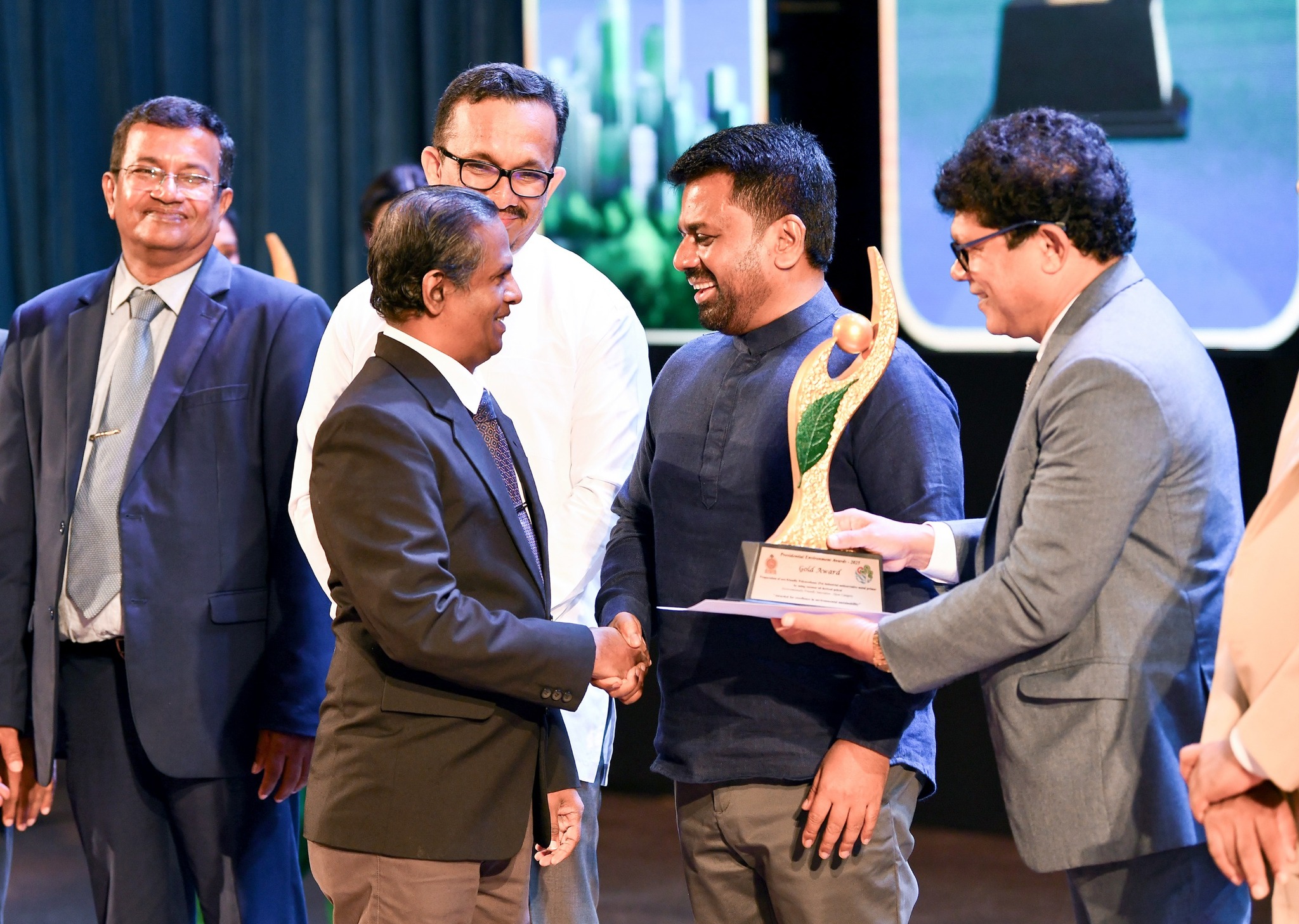 The 11th Annual Presidential Environment Awards 2025,...
Read more
The 11th Annual Presidential Environment Awards 2025,...
Read more
 The Inaugural Session marking the commencement of work...
Read more
The Inaugural Session marking the commencement of work...
Read more

|
Central Environmental Authority |
|
|
104, Denzil Kobbekaduwa Mawatha, |
|
|
Tel: 011-2872419,011-2872278,011-2873447,011-2873448 |
|
© 2013 Copyright Central Environmental Authority - Sri Lanka.All rights Reserved.
Solution by: