|
 |


|
|




The Central Environmental Authority (CEA) was established in August 1981 under the provision of the National Environmental Act No:47 of 1980. The Ministry of Environment and Natural Resources (ME&NR) which was established in December 2001 has the overall responsibility in the affairs of the CEA with the objective of integrating environmental considerations in the development process of the country. The CEA was given wider regulatory powers under the National Environment(Amendment) Acts No:56 of 1988 and No:53 of 2000.
Six sampling locations have been sleeted for the assessment of the water quality in Dadugam Oya from the period of April 2011 to December 2012.
Sampling Locations
| Sampling Locations: | GPS Coordinates: |
| Sampling Point 1 (Kirindivita Bridge) | (44386380E, 0784148N) |
| Sampling Point 2 (Kotugoda Bridge) | (44381229E, 0787535N) |
| Sampling Point 3 (Opatha Bridge) | (44380612E, 0789277N) |
| Sampling Point 4 (Muthuwadiya Bridge) | (44377962E, 0791871N) |
| Sampling Point 5 (Palliya Junction Bridge) | (44377454E, 0788598N) |
| Sampling Point 6 (Kindigoda Bridge) | (44376592E, 0786017N) |

Summary report of water Quality index ,ecological Condition Grade and colour code.
according to two option indicators
| Sampling Location |
Option I |
Option II |
||||||
| Index Value | Ecological Condition | Grade | Colour Code | Index Value | Ecological Condition | Grade | Colour Code | |
| Kiridiwita | 58 | Poor | D | Orange | 87 | Good | B | Green |
| Kotugoda | 57 | Poor | D | Orange | 81 | Good | B | Green |
| Opatha | 53 | Poor | D | Orange | 71 | Fair | C | Yellow |
| Muthuwadiya Juntion | 50 | Poor | D | Orange | 63 | Poor | D | Orange |
| Paliyawatte Junction | 45 | Poor | D | Orange | 56 | Poor | D | Orange |
| Kiridigoda | 54 | Poor | D | Orange | 65 | Fair | C | Yellow |

Plot of WQI against Sampling Locations according to two Options
Water quality of Dadugam oya Water
The spatial pattern of deteriorating trend of water quality from up stream to down stream was recorded in Dadugam Oya. The main sources of pollutants is vary from domestic to industrial toward the down stream.
It is reveal that the quality of the water of Dadugam oya is not satisfactory with respect to all parameters which has been used for the evaluation of the water quality index,. It is revealed that the turbidity which indicate the surface runoff and the microbiological contaminant are always exceeded throughout the monitoring period. The Index shows that the ecological condition of the water is poor in all the sampling locations of the Dadugam Oya ( Water Quality index is in the range of 45 -64 for all monitoring locations with respect to eleven parameters)
Water quality of the upstream water of Dadugam oya (Kiridiwita and Kotugoda) does not shows any evidence of the industrial pollution. The source of contamination of the upstream is very few. The only exceedances are always turbidity and microbiology contaminant. The highest WQI ((with compare to the other location was recorded at Kiridiwita (58) and second highest (57) was recorded at the sampling location Kotugoda The other parameters in these two locations rarely exceed the standard value during the period of two years.
The water quality of mid stream site to down stream indicate the evidence of the industrial pollution with compare to the domestic and non point sources. It is clearly indicated from Optha to downstream. The gradual decrease of dissolved oxygen in water from downward from this point and high level of Chemical Oxygen Demand was recorded in most of the time.. Values obtained for heavy metals are lower than the detection limits of the method used for the detection of heavy metals and nutrient such as nitrate and phosphate are significantly below the proposed standards of the Central Environmental Authority during the total monitoring period up to August 2012 for all monitoring sites . The significant increases dissolved chromium (from the level of 0.01 mg/l to 0.04 mg/l) could be observed from Opatha to downstream from August 2012. However it is below the level of ambient water quality standard proposed by the CEA, This should be carefully monitored for several months in future.But Furthermore values obtained for COD for the latter stretch of the river are comparatively higher than the standard value for most of the times. There is a significant difference between the values obtained during the low and high flow rates of the year for all types of pollutant indicators.
The WQI is gradually decreases up to 45 toward the downstream direction of the Dadugam Oya.The microbiological contaminant is become less significant in downstream from Optha to with compare to the upstream.
The WQI evaluated excluding turbidity and faecal contaminant clearly shows that the domestic sources are more prominent in the upstream site of the Dadugam Oya . ( Kiridiwita (87%) and Kotugoda (81%)_) The Quality of the water could be remarkably improved up to the level of good by controlling the domestic sources such as disposal of sewage and urban runoff .
In the case of the sampling sites ,Opatha the water could be slightly increases up to the level of fair by elimination of the domestic contaminant. From downstream from Opatha even with the controlling of the domestic sources it is very difficult to improve the quality of the water at all. The total contribution for the deterioration of the water quality of the water is industrial pollution. Therefore immediate measures has to take to control the further deterioration of the water quality of Dudugam Oya
Obtain Environmental Protection License and Protect the Environment..
Scheduled Waste Management Licensing - generate collect, transport, store..
Resolving public complaint related to environmental issues..
Supporting for better decision and planning through GIS/Remote sensing technology...

 The agreement between the Central Environmental Authority...
Read more
The agreement between the Central Environmental Authority...
Read more
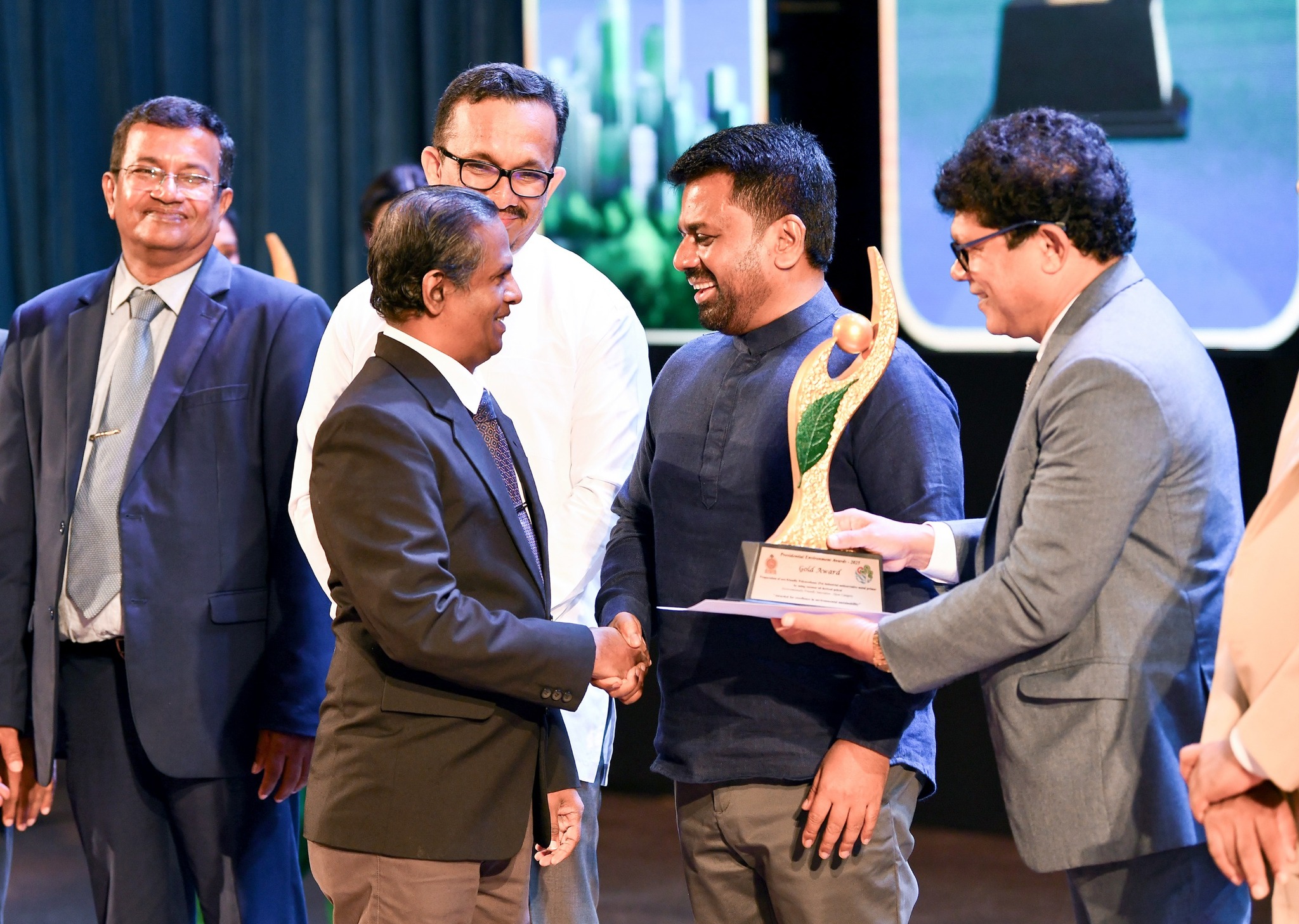 The 11th Annual Presidential Environment Awards 2025,...
Read more
The 11th Annual Presidential Environment Awards 2025,...
Read more
 The Inaugural Session marking the commencement of work...
Read more
The Inaugural Session marking the commencement of work...
Read more

|
Central Environmental Authority |
|
|
104, Denzil Kobbekaduwa Mawatha, |
|
|
Tel: 011-2872419,011-2872278,011-2873447,011-2873448 |
|
© 2013 Copyright Central Environmental Authority - Sri Lanka.All rights Reserved.
Solution by: